 |
Cain or Abel: An Eternal ChoiceIs the story of Cain and Abel only about the past, or is it our present, when we often carry the mental states of both the murderer Cain and the sacrificial Abel? How does the lack of emotional awareness lead to unmanageable crisis and tragedy? How do we find perfect harmony with ourselves and our surroundings? Bishop Ruben Zargaryan comments. |
 |
The healing of the leper and the paralytic (5:12-26)Luke 5:12-26 describes how Jesus heals lepers and paralytics and how His fame spreads. What is more important during prayer? How can our faith and prayer help our loved ones? Who has the right to forgive sins? Do we praise God after receiving an answer to prayer? The Gospel passage is explained by Father Markos Mangasaryan. |
 |
From fishermen to apostles (5:1-11)In the fifth chapter of the Gospel of Luke, verses 1-11, it is described how Jesus, sitting in a boat on the shore of the Sea of Gennesaret, taught the people, then helped the fishermen catch a large catch of fish and, turning to Simon, urged him not to be afraid, because from now on he must catch men for his living. How to overcome the failure of personal efforts and trust in God? Is anyone unworthy of God's mercy? How do we combine worldly, everyday activities with a spiritual mission? The Gospel passage is interpreted by Father Markos Mangasaryan. |
 |
Burial or Cremation
What is the position of the Armenian Church on cremation?
How do the Christian understandings of the human body and soul form a single whole, and why is burial seen as a manifestation of hope for resurrection? What are the exceptional cases when the church performs a funeral ceremony?
Bishop Ruben Zargaryan comments.
|
 |
The Man in the Storm: The Lesson of the Prophet JonahWhy does the prophet Jonah not listen to the word of the Lord and sail in the opposite direction? How and why do we run away from the Lord and the trials that befall us today? What is the source of a person's inner hopelessness, and how does avoiding our mission endanger the lives of those around us? Finally, how to surrender to our own crisis so that it creates change within us? How to hear the voice of God? Bishop Ruben Zargaryan is |
 |
Various healings (4:31-45)In verses 31-45 of the fourth chapter of the Gospel of Luke, Jesus performs various healings, casting out evil demons and unclean spirits from people. The demons recognized Him as the Son of God, but Jesus silenced them, silenced them so that His identity would not be revealed. Why did Christ silence the demons, what is the kingdom of God, why do we want to be close to the Lord or run away from ourselves, and do we continue to serve the Lord after receiving help? The Gospel passage is read by Father Markos Mangasaryan. |
 |
The Temptation of Jesus in the Desert (4:1-13)
The fourth chapter of the Gospel of Luke, verses 1-13, presents how the devil tempted Jesus in the desert for 40 days, tempting Him and offering Him three different temptations.
How does Christ remind us that we should not tempt God, and how can we ourselves, with the power of God, withstand the constant trials of our lives?
The Gospel passage is interpreted by Father Markos Mangasaryan.
|
 |
Worship: The Highest Work
The more we depend on the Lord, the freer we are, and the further we are alienated from God, the closer we are to slavery. What parallels does ritual worship have with work? Bishop Ruben Zargaryan explains.
|
 |
The Preaching and Imprisonment of John the Baptist (3:10-20)
In verses 10-20 of the third chapter of the Gospel of Luke, the preaching of John the Baptist continues. What instructions did he give to the tax collectors and soldiers? What did he mean when he said, “I baptize you with water, but one mightier than I will come, the latchet of whose sandals I am not worthy to untie, and he will baptize you all with the Holy Spirit and fire?” Father Markos Mangasaryan comments.
|
 |
The Preaching of John the Baptist (3:1-9)
The third chapter of the Gospel of Luke, verses 1-9, presents the preaching of John the Baptist and how he prepares for the coming of the Lord. Father Markos Mangasaryan comments.
|
 |
Work: Service or Slavery?Why is work given to man in the Bible as a calling and mission, and also as a blessing? Bishop Ruben Zargaryan explains. |
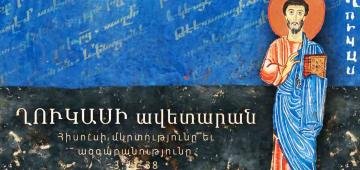 |
The Baptism and Genealogy of Jesus (3:21-38)The Gospel of Luke, chapter 3, verses 21-38, presents the baptism of Jesus Christ by John the Baptist. Jesus was baptized, although he had committed no sin, he was baptized so as not to be different, not to be set apart from others, he was baptized to show his humility. The Gospel passage is interpreted by Father Markos Mangasaryan. |