 |
They were Shooting the War
From the very first days of Artsakh war, a number of journalists, cameramen and directors were also in the front line. Many of them held weapon along with the camera, some of them died. It is due to their work that today we are able to get an understanding of Artsakh freedom war, certain heros with the help of documentaries. Who were the directors present in the war, what is the face of war like from the opposite side of the camera, is he/she capable of being objective and present the war as a universal evil?
Hayk Hambardzumyan discussed these issues with journalist Ruzanna Bagratunyan.
|
 |
Diaspora: Definitions and Characteristics
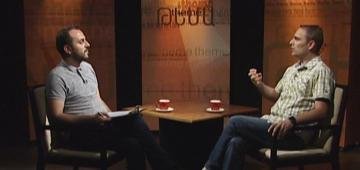
The term “Diaspora” is characterised with the concepts of dissemination, painful national memory, collective identity, loyalty to historical motherland etc. Yet, all these different definitions cannot fully exhaust this capacious concept, since the communities, the reasons for leaving the country, living conditions of new places and the mechanisms of preservation of identity are all different. What are the characteristics by which contemporary Diaspora studies are lead, when are the diasporas born and when do they die, what conditions are required to sustain their existence? Hayk Hambardzumyan spoke about these issues with Vahe Sahakyan, specialist in Diaspora studies.
|
 |
Changing Diasoras and Identities
Modern studies of Diaspora proves that there phenomenon of Diaspora has three key characteristics – dispersion at leas in two directions, presence of the connection with imaginary or real motherland, and realization of their identity as a Diaspora. How are the diasporas changing over time, how do these changes affect the identity, what methodologies are there for exploring through various issues concerning Diaspora? Hayk Hambardzumyan spoke about these issues with Vahe Sahakyan, specialist in Diaspora studies.
|
 |
Architecture Binnale
“Yerevan Architecture Binnale 2016” was opened in Alexander Tamanyan National Museum-Institute of Architecture. The issues related to contemporary Armenian architecture and urban planning are under public scrutiny always, almost every day you get a new coverage on constructions which are demolished, those erected in their stead, or ones that fully deface the overall image of the capital. What projects did the binnale participants present, how do the Armenian and foreign architects see the present and future of our architecture? Hayk Hambardzumyan discussed these questions with Anush Ter-Minasyan, Director of Alexander Tamanyan National Museum-Institute of Architecture.
|
 |
Current Issues related to the Study and Publication of Monuscripts
The rich manuscript heritage reserved in Matenadaran (Manuscript Library) and other collections is not only something to exhibit and be proud of, but also in need of new studies and publishing. What studies of manuscripts are currently underway, how are the results of these studies used in Armenian studies, what are the current issues in the publication of scientific research originals?
Hayk Hambardzumyan discussed these issues with the Head of Department of Manuscript Studies and Depositories, PhD in History Gevorg Ter-Vardanyan.
|
 |
Charles Aznavour, Saved Jews and French Resistence
How did Aznavourian family participate in the salvation of Jews during the World War II, and what was their relation with Missak Manouchian, the national hero of France? What is the reason for all of these to be disclosed in the book written by a Jewish scholar?
Hayk Hambardzumyan spoke about these issues with the Director of Tchobanian Institute in Paris Varoujan Sirapian.
|
 |
The Timeliness of Shahan Shahnour’s Compositions
Shahan Shahnour is one of the most unique and at the same time the most disputed authors in the Diasporan literature. The works of Shahnour are published and explored quite sufficiently both in Diaspora and in Armenia, however there is a lack of an academic or a complete collection of his works. Hence, partly to fill this gap, the three-volume collection compiled and edited by Diasporan intellectual, literary critic Grigor Shahinyan was published in 2016 in Yerevan.
Hayk Hambardzumyan spoke about this publication, as well as the peculiarities of Shahan Shahnour’s works with the editor-in-chief of Azg Daily Hakob Avetikyan.
|
 |
Armenian Culture in World Heritage List of UNESCO
At the 40th session of the World Heritage Committee of UNESCO held in Istanbul since July 1 the capital of Bagratid Kingdom Ani was inscribed on the List of UNESCO World Heritage. How and under what definitions did Ani appear there? How important it is to inscribe tangible and intangible cultural heritage on UNESCO lists? Hayk Hambardzumyan spoke about these issues with the Deputy Minister of Culture, Nerses Ter-Vardanyan.
|
 |
“Gretert” and Youth Literature
Offically called “Literary Youth Paper”, other interpretations – “Gretert” meaning paper of writings, and more playful and straight-forward – “almost paper”. The comments on the title of this periodical called “Gretert” indicated its direction and lack of high ambitions. This may come to explain the fact, that it’s been 10 years since “Gretert” in most loved environment and platform for literary youth, bringing forth a number of presently famous names in the Armenian literature.
Hayk Hambardzumyan discussed the past and present of “Gretert”, the issues of contemporary youth literature with the editor-in-chief of the paper, writer Gurgen Khanjyan.
|
 |
Innerving Power of Art
Miniature sculpture, monumental and machine sculpture, trimming, molten and hewn works, ceramics, design, painting and graphics: more than 1000 compositions in Armenian and abroad. Sculptor Benik Petrosyan left us two decades age, yet his works keep living their own life, make people admire and think about its gifted author.
Hayk Hambardzumyan talked about the art of Benik Petrosyan with painter Arev Petrosyan.
|
 |
“Manufactory” of Literary Studies and Popularization of Literature
To adequately present the literature, boost reader’s curiosity, popularize literary literary critics’ products, the literary critics along with the “manufactory” of literary studies coming to make the background one entirety, play extremely important role. What do we mean by “manufactory” of literary studies, what is required for its uninterrupted functioning, how can we revitalize the “writer-publisher-buyer-literary critic-public” chain?
Hayk Hambardzumyan discussed these issues with literary critic, doctor of philology Tigran Simyan.
|
 |
Armenian Medieval Art Presented Anew: between Journalism and Science
To make the rich medieval Armenian culture accessible in this modern world replete with aggressive information and advertisements, the now traditional tools, such as scientific media, book publications, etc. are not sufficient. There is a need for internet websites, digital databases, and of course new professional approach. Are these resources effective, how should our art in general be presented, if ever? Hayk Hambardzumyan talked about these issues with PhD in History Karen Matevosyan.
|